Select Page

Portfolio

Project

Hivemind
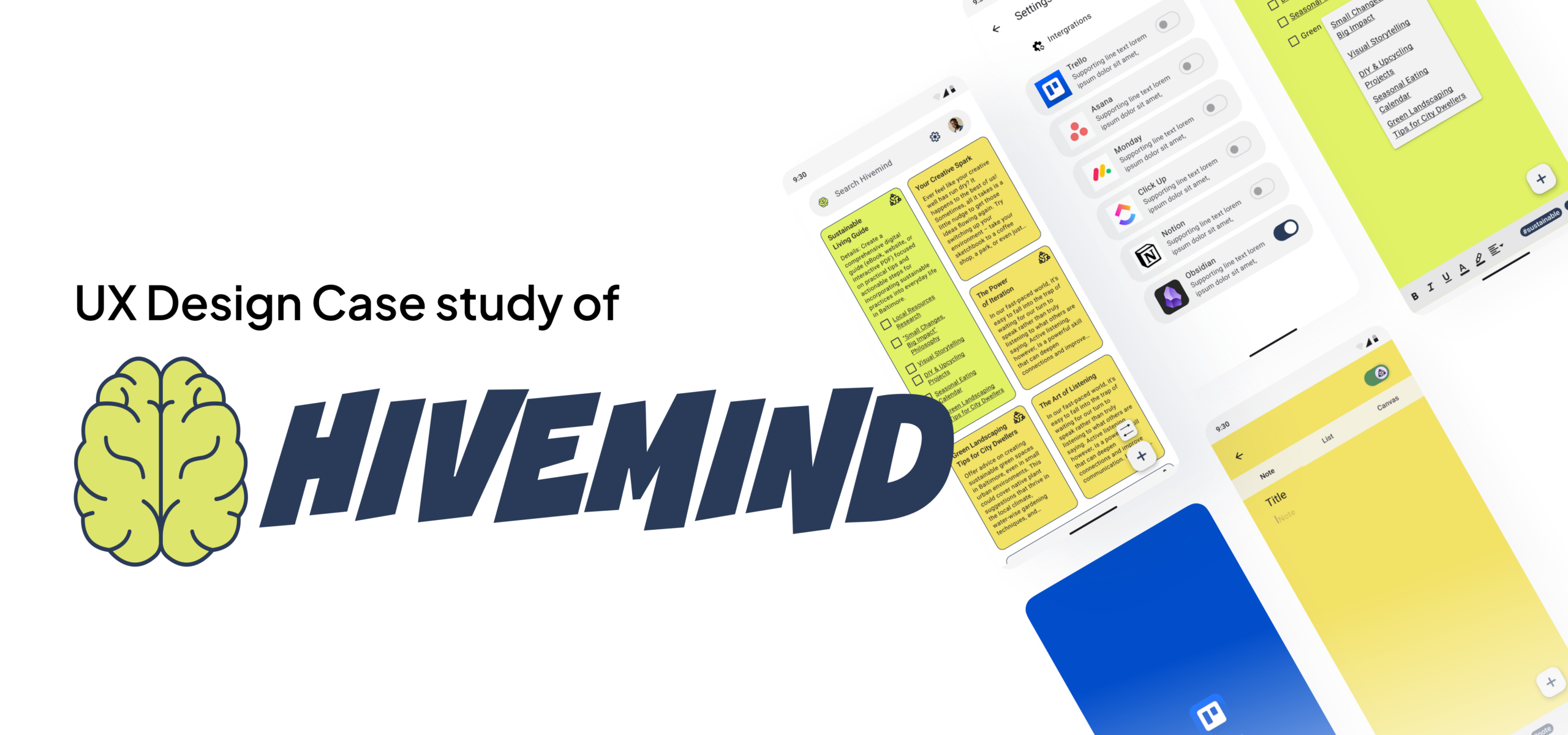
UX design case study mockup for Hivemind mobile app showing a product designer's process on a smartphone screen.

The project began with a fundamental observation: digital sharing often feels like an afterthought. As shown in my initial mockups, Hivemind was designed to shift this paradigm, moving from individual note-taking to a “collective intelligence.” I identified that professionals lose critical insights because current tools create fragmented silos. By prioritizing a “share-first” approach, Hivemind aims to unlock new levels of innovation through the seamless cross-pollination of ideas.
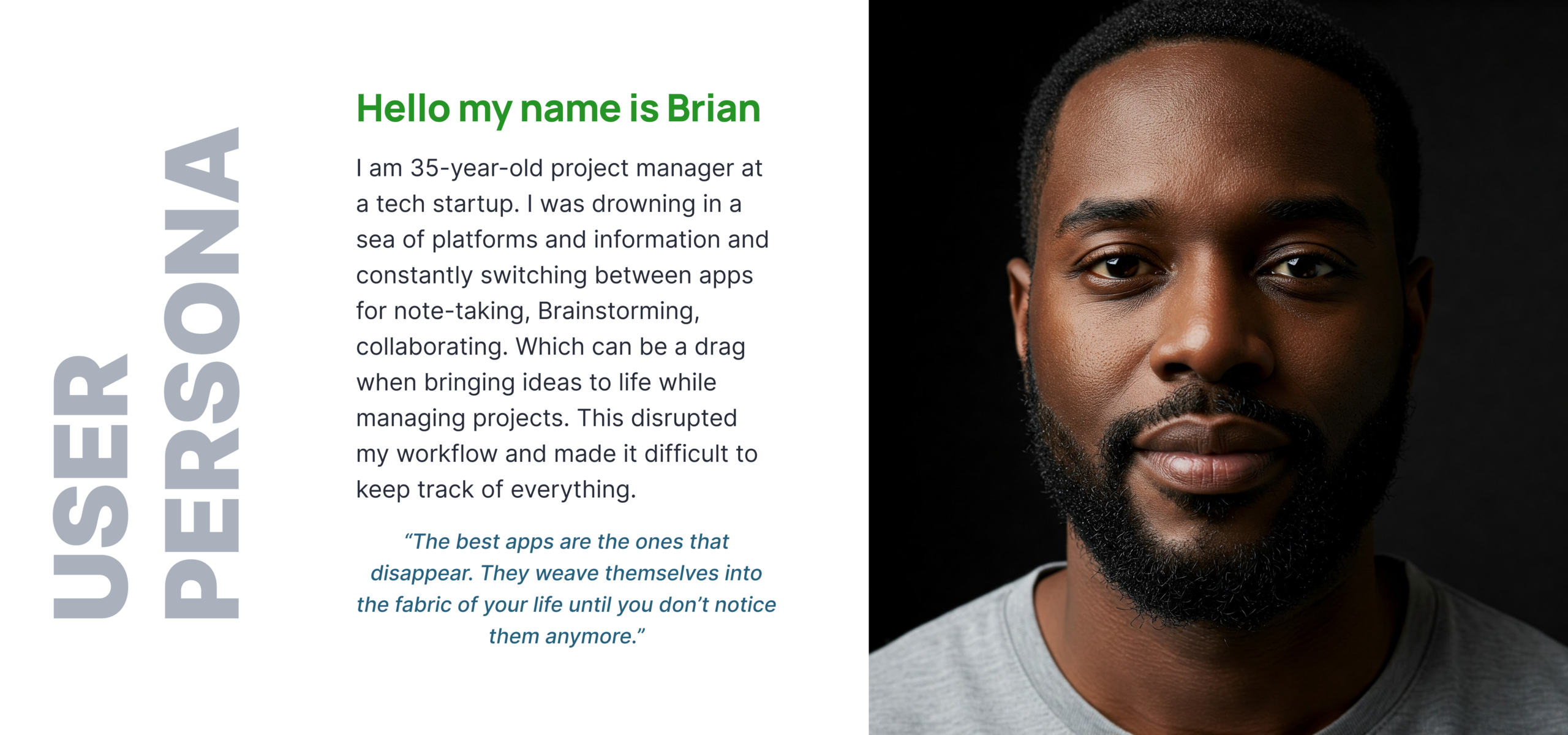
User persona research and profile for Hivemind UX design case study, showcasing a product designer's user discovery process.

To validate this need, I conducted a deep dive into user behavior, as detailed in my research and persona profiles. After screening 27 individuals and interviewing five, a consistent theme emerged: a strong willingness to share data in exchange for collaborative power, provided that privacy is respected. This phase was crucial in defining the “Hivemind” philosophy—accelerating goal attainment through a shared digital workspace that respects individual security.
Mobile app style guide and UI component library for Hivemind UX design case study, detailing color palette, typography, and button states.

A major milestone in my process was “the pivot” away from traditional AI. While AI features are popular, my research into the UI component library and architecture revealed that building a custom, non-tainted AI system would be prohibitively expensive and slow. Instead, I pivoted to a high-efficiency tagging and API integration system. This provides the “organizational intelligence” users need—finding and connecting disparate notes—without the security risks or $20,000+ price tags associated with complex AI.
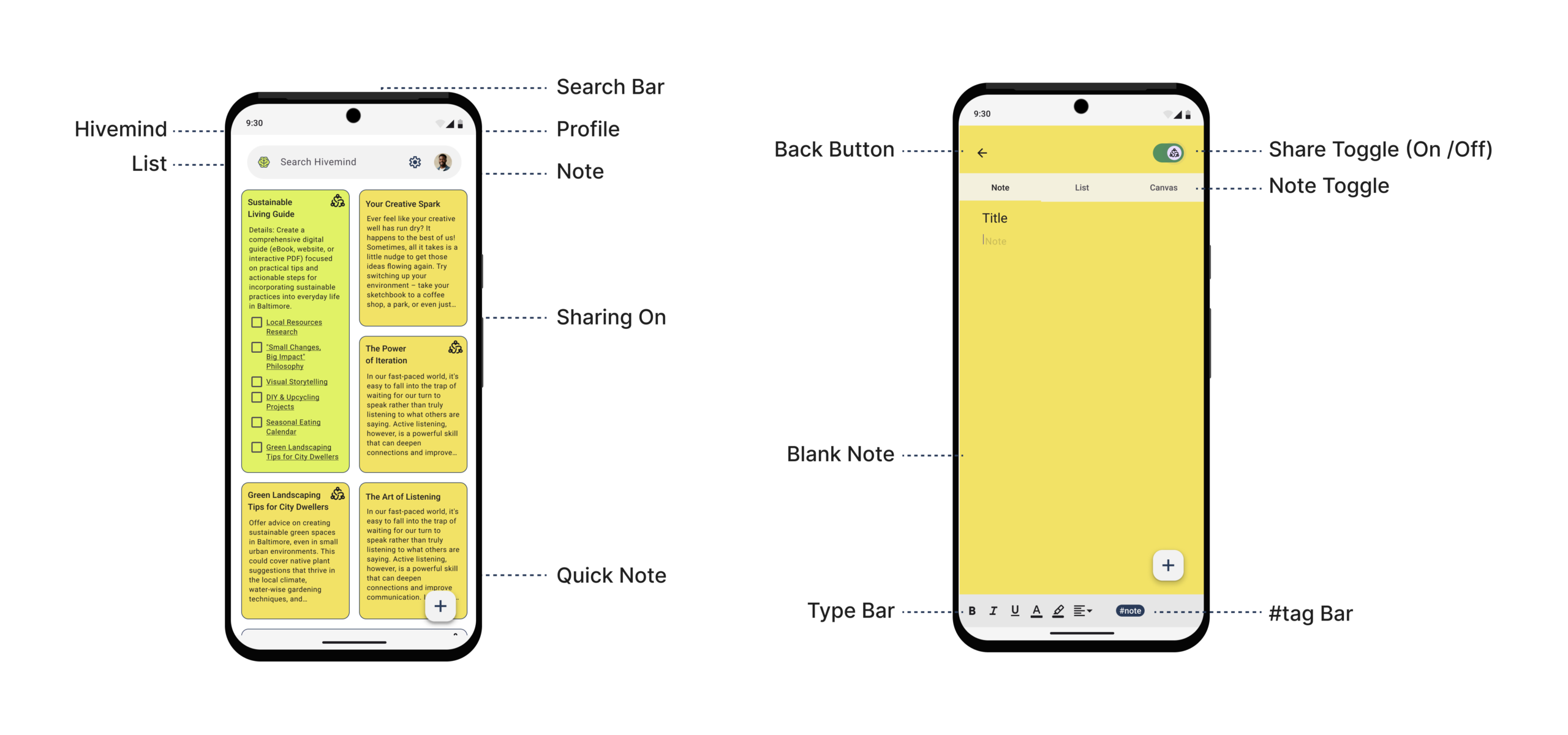
Mobile app wireframe and high-fidelity UI design comparison for Hivemind UX case study, illustrating the product design evolution from sketch to final interface.

The design journey from sketch to high-fidelity interface focused on bridging the gap between existing tools. By integrating popular APIs like Trello, Hivemind allows users like “Brian,” a project manager, to oversee multiple teams using different software from a single, minimalist plane. The solution emphasizes interoperability, ensuring that whether you are creating a quick list or a complex canvas, your data remains accessible and connected across all your professional platforms.

Believin' Showcase display

The heart of the final prototype is an automated tagging system that gives Hivemind a “mind of its own.” As seen in the final interface designs, the system analyzes content to suggest and update tags dynamically, creating interconnected pathways of information. User testing confirmed that this foundational layer significantly improves searchability and retrieval. While there is room for further UX refinement, Hivemind successfully demonstrates the power of a centralized, integrated hub for professional knowledge management. Full Figma User Flow Prototype Here 

Get In Touch

Let's Grow Your Brand Together

13 + 11 =

vig·il: a period of keeping awake during the time usually spent asleep

We design bangers that keep your eyes pealed back!

Visuals For Vigil Copyright © 2026